Beyond the Leak: Building Smarter Emissions Strategies in Alberta’s Oil and Gas Sector

They say if you spend enough time in the field, your instincts sharpen before your tools do. After 25 years chasing leaks across Alberta’s oil and gas facilities, I’d say that’s about right. I’ve stood on frostbitten steel catwalks, hands wrapped around a thermal camera, watching invisible hydrocarbons dance in the cold air—reminders that what we can’t see often costs us the most.

Fugitive emissions aren’t just a regulatory checkbox. They’re operational liabilities, safety concerns, and—when managed right—real financial opportunities. Especially here in Alberta, where the regulatory framework has matured to the point that leak detection and repair (LDAR) can be more than a compliance measure—it can be a revenue stream.
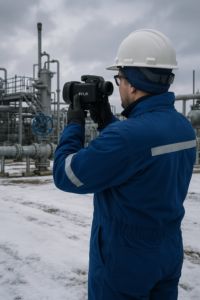
Dale FLIR LDAR 2 200x300 - Beyond the Leak: Building Smarter Emissions Strategies in Alberta’s Oil and Gas SectorMy earliest LDAR days were all about AVO—audio, visual, olfactory inspections. You’d listen for hissing, watch for frost patterns, or catch a faint whiff of gas and log it. That was the norm, and to be fair, it still has its place in the toolkit. But the game changed when we started integrating optical gas imaging. Suddenly, we weren’t guessing. We could see the leaks—live, in motion, in conditions where AVO would fail you every time.

One winter near Fox Creek, I was called out to a facility with persistent line losses no one could trace. Sub-zero temperatures, compressors cycling, no obvious signs. Using an OGI camera, I spotted a leak on a vertical flange, high up and out of the normal AVO zone. It had likely been venting for months. That one detection saved them tens of thousands—not just in product, but in avoided non-compliance. Moments like that change how you think about fieldwork.

More recently, the spotlight’s shifted toward Compressor Seal Vent (CSV) testing. It’s no longer a “nice-to-have.” With the AER’s April 2025 update to Directive 060—Bulletin 2025-15—the province doubled down on expectations for Fugitive Emission Management Programs (FEMPs), especially around alternative pathways. That means operators can no longer rely on generic plans or assumptions. Your data has to be clean, structured, and defensible.

And CSVs are often where the credits come into play. Alberta’s TIER program, paired with its serialized offset credit market, gives real financial weight to emissions reductions. When you can prove that you’ve eliminated or captured a vent source—whether it’s from a rod packing seal or an old bleed-off valve—you’re not just avoiding penalties. You’re potentially banking offset credits with real market value. I’ve helped operators turn those reductions into tangible gains, sometimes amounting to six-figure returns.

But that only happens when the data stands up to scrutiny. I’ve seen promising credit projects fall apart because flow calculations weren’t defensible or maintenance logs were incomplete. It’s not about volume—it’s about verification. A simple CSV test, done right, can mean more than a complex vent capture system with missing documentation.
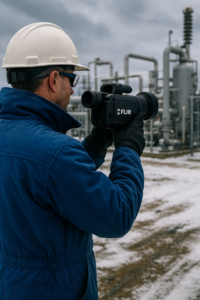
Dale FLIR LDAR 200x300 - Beyond the Leak: Building Smarter Emissions Strategies in Alberta’s Oil and Gas SectorAnd here’s something that gets overlooked in a lot of LDAR strategies: site culture. The best tech in the world doesn’t matter if the team in the field doesn’t buy in. I’ve worked on sites where techs would rush through inspections to get back to scheduled work, not realizing they were bypassing potential emissions points. I’ve also worked with operators who built emissions accountability into their daily routine—those are the sites that pass audits, reduce fines, and unlock carbon value.

Another lesson? Coordination is king. Emissions testing, engine checks, measurement verification—when these are done in isolation, you burn hours and budget. But with proper planning, a single mobilization can cover LDAR, MSAPR, CSVs, and even vent quantification. It’s not just operational efficiency—it’s regulatory foresight. That’s what gets noticed during EPAP reviews and site inspections.

Now, not every province offers the same opportunities. Saskatchewan and BC have their own frameworks, but when it comes to carbon offsets, Alberta is where the playbook really comes together. The TIER program isn’t just about compliance—it’s about strategy. You reduce emissions, document them right, and suddenly you’re holding assets. And in a market where margin matters, those assets count.

I once worked with an operator who had a dozen scattered sites and no unified emissions approach. They were good people, but stretched thin. We implemented a full LDAR plan—customized FEMP, regular CSV testing, quantification built into every report. By year two, they weren’t just compliant—they were offset-positive. They didn’t grow their footprint, but they increased their asset value. That’s what happens when field strategy and regulatory awareness line up.

So no, LDAR isn’t just about finding leaks. It’s about building programs that don’t just pass audits—they generate revenue, reduce risk, and make field crews part of something bigger than compliance.

That’s what keeps me going. Not the tech, not the credits—the shift in mindset. Helping operators see emissions not as a problem to hide, but a performance metric to manage.

These days, I spend less time explaining why emissions matter and more time showing people where the opportunities are buried—often in the quiet, overlooked corners of a site. It’s not about chasing leaks anymore. It’s about creating systems that work even when we’re not watching. And that’s the kind of impact I’m proud to leave behind.

Get to Know SCADA: Common Misunderstandings, Pros, and Cons

Supervisory Control and Data Acquisition (SCADA) is one of the most adaptable and commonly utilized technologies for automation and control systems. It is a form of industrial control system meant to monitor and regulate equipment, processes, and machinery in a wide range of industries, including energy and utilities. Despite its extensive application, there are still misconceptions about SCADA that must be dispelled. In this post, we will explore some common misunderstandings, the advantages and disadvantages of SCADA, and how businesses may utilize it to their advantage.

One of the most widespread misunderstandings about SCADA is that it is mainly utilized in industrial contexts, such as factories and power plants. In fact, SCADA systems can be implemented in a variety of settings, including transportation, water, and municipal services. SCADA systems are also not restricted to operating physical machines. In addition, they can be used to monitor and operate software systems, including process automation software and building automation systems.

SCADA1 - Get to Know SCADA: Common Misunderstandings, Pros, and ConsAnother widespread misunderstanding is that SCADA is costly and requires extensive upkeep. SCADA systems need an initial investment, but they can provide significant long-term cost reductions. For instance, they can automate processes, cut labor expenses, increase efficiency, and decrease energy use. Moreover, SCADA systems are typically user-friendly and require low maintenance.

SCADA systems have various downsides despite their benefits. One of the most crucial is their susceptibility to security threats if they are not properly protected. It is essential that all SCADA components are adequately secured and monitored, and that all transferred data is encrypted. In addition, SCADA systems can be difficult to set up and integrate, therefore it is essential to have knowledgeable employees handling installation and upkeep.

SCADA systems have a variety of advantages that make them appealing to organizations despite their limitations. For example, SCADA systems can improve operational visibility and control, as well as enable improved data collecting an

SCADA2 - Get to Know SCADA: Common Misunderstandings, Pros, and Consd analysis. In addition to automating processes and reducing labor costs, SCADA systems can enhance safety by monitoring and managing hazardous operations.

There are a variety of possible applications for SCADA systems. SCADA can be used to monitor and control industrial activities such as energy production and manufacturing. SCADA systems can also be used to monitor and control building automation systems, such as lighting and HVAC, and transportation systems, such as railroad and subway systems.

SCADA can be used in a variety of different applications such as pipeline transmitters, systems integration, and turnarounds as well. For pipeline transmitters, SCADA systems can be used to monitor and control the pressure, flow, and levels of the pipelines. For systems integration, SCADA can be used to integrate various devices and systems into a single system and control them from a single interface. Finally, for turnarounds, SCADA systems can be used to monitor and execute complex control processes such as scheduling, tracking, and executing maintenance activities. The use of SCADA in these applications can result in improved operational efficiency, enhanced safety, and cost savings.

Ultimately, SCADA systems can offer a variety of advantages to enterprises. However, it is vital to be aware of the potential negatives, such as the risk of security assaults, and to make sure that they are adequately guarded and monitored. Also, it is essential to have knowledgeable employees available to handle installation and maintenance. SCADA systems may give enterprises with enhanced operational visibility, improved data collecting and analysis, and increased efficiency with the correct staff and security measures.

8 Undeniable Benefits of Robots in the Oil and Gas Industry

You’ve probably heard of news about robotics and other technologies taking over jobs in the oil and gas industry. Well, it’s undeniable that this is one of the fears that workers are having.

While advanced technology provides a wide range of benefits, it’s not 100% good. It’s inevitable for disadvantages to arise.

However, despite these disadvantages, such as the decrease in job opportunities, the benefits outnumber them. Here’s a look at some of that robotics and their benefits:

All Terrain

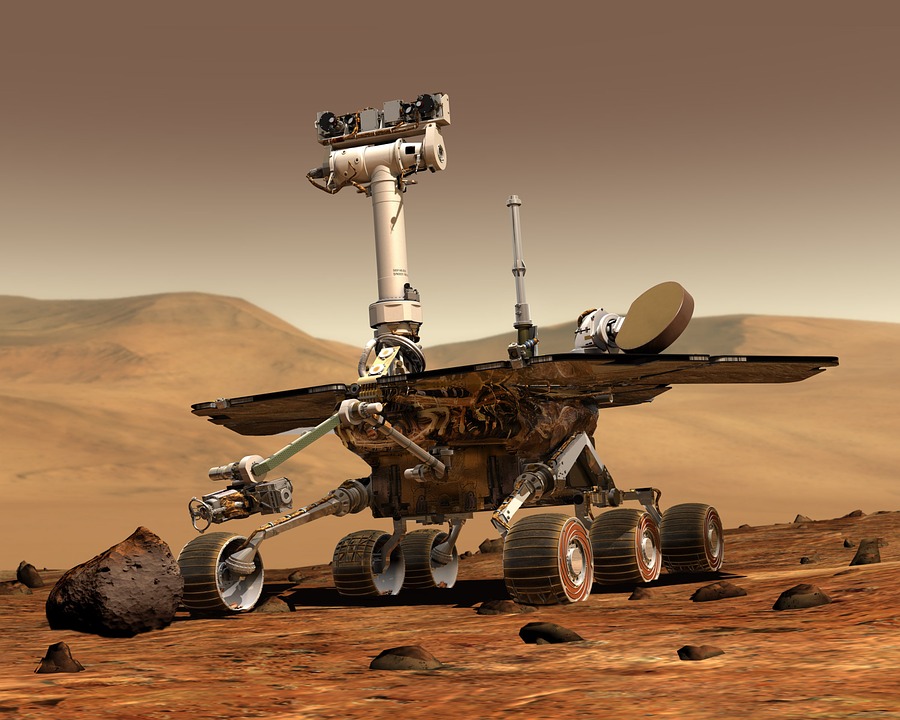
mars mars rover space travel robot - 8 Undeniable Benefits of Robots in the Oil and Gas Industry

Unmanned vehicles, as the name suggests, does not require someone to drive it manually.

That means whether companies want to perform operations ground, airborne, or even underwater, these vehicles can help.

Operational Efficacy

Humans would require too much resources and time to do these operations. Though with automated vehicles, the costs will be reduced.

Operations will also be done in a shorter period of time. Besides the financial aspect, operations will also be safer and efficiency will improve.

That said, there are a wide range of operations that these vehicles are capable of doing.

Wide Range of Operations

remote control toy car on green car track - 8 Undeniable Benefits of Robots in the Oil and Gas Industry

Advanced vehicles in the oil and gas industry are capable of doing services. These include transportation, exploration, extraction, prospecting, inspections, and more.

Remotely Operated

The engineers that supervise operations are able to give out instructions from their workplace miles away from the actual job site.

Drilling

Battery - 8 Undeniable Benefits of Robots in the Oil and Gas Industry

Advanced drills are also helpful because it makes the exploration and acquisition easier and more productive.

It would also reduce the cost for the equipment if advanced drills are used. This technology offer various features and they are proven to be sturdier than average drills.

Monitoring Job Site

Due to the sensors of drones and their flexible flight, they can provide accessibility to the oil and gas industry. This is especially important for exploration.

What’s more, drones are getting upgrades over the years and it won’t reach it peak soon.

In fact, drones are now capable of monitoring, inspections, and surveillance in a wide variety of structures.

This will alert companies of any signs of problems. That way, disasters can be avoided. Drones are also upgraded with Wi-Fi.

That means they can also connect to cloud technologies, making life easier for oil and gas companies.

Extreme Weathers

Since the industry tends to work on extreme weathers, the robots are designed to withstand temperature fluctuations.

Labor

Finally, robots do not experience fatigue and therefore, they are perfect for labor. Robots are also capable lifting objects quickly.

Conclusion

There are many emerging technologies in the oil and gas industry, and so are the benefits. The only thing that matters now is, when will oil and gas companies implement these changes in their operations?

If you have any questions with robots in this industry, feel free to leave them in the comment section below.

4 Benefits of Drilling Wells in Different Angles

The traditional way of drilling for natural gas, oil, and other is through vertical wells. It is when rigs drill straight down in the surface.

However, despite the many companies that use this method, there’s a better way to obtain information, stimulate reserves, or hit the targets accurately. That is by drilling in other angles besides vertical.

This is what directional drilling is all about. Therefore, the ability to steer the well to leave from the vertical is important.

But that’s not enough benefits. So why you should wells be drilled differently? Why not vertical?

Why Drill Wells in Different Angles?

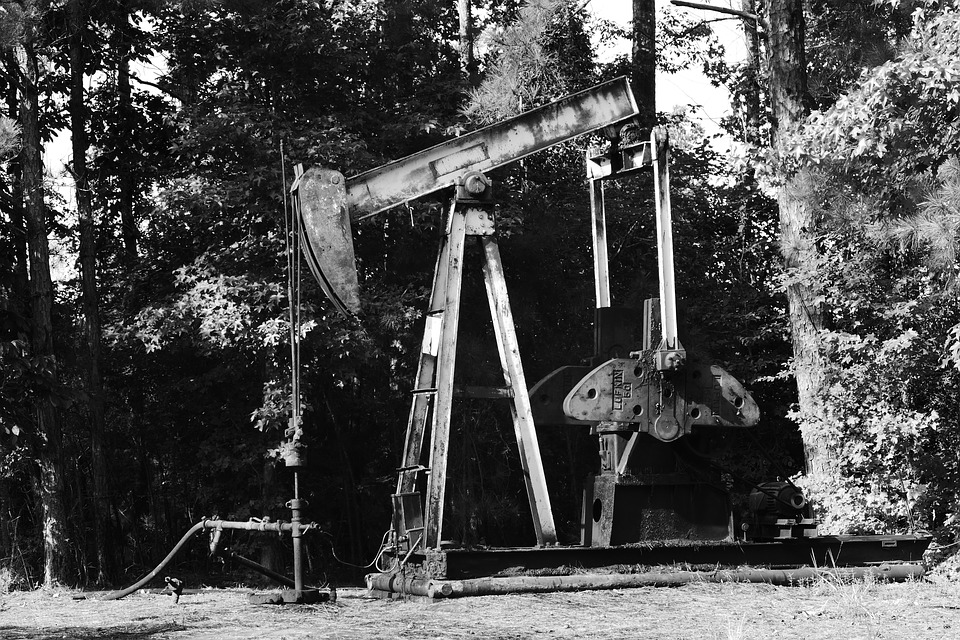
oil pump black white industry - 4 Benefits of Drilling Wells in Different Angles

There are many benefits of drilling wells besides the vertical angle. It can be used to reach targets while increasing the measurements of the “pay zone”. Reduce footprints of gas field development. Intersect fractures.

There are basically a lot of benefits. Here’s a look at four of them:

Excavation

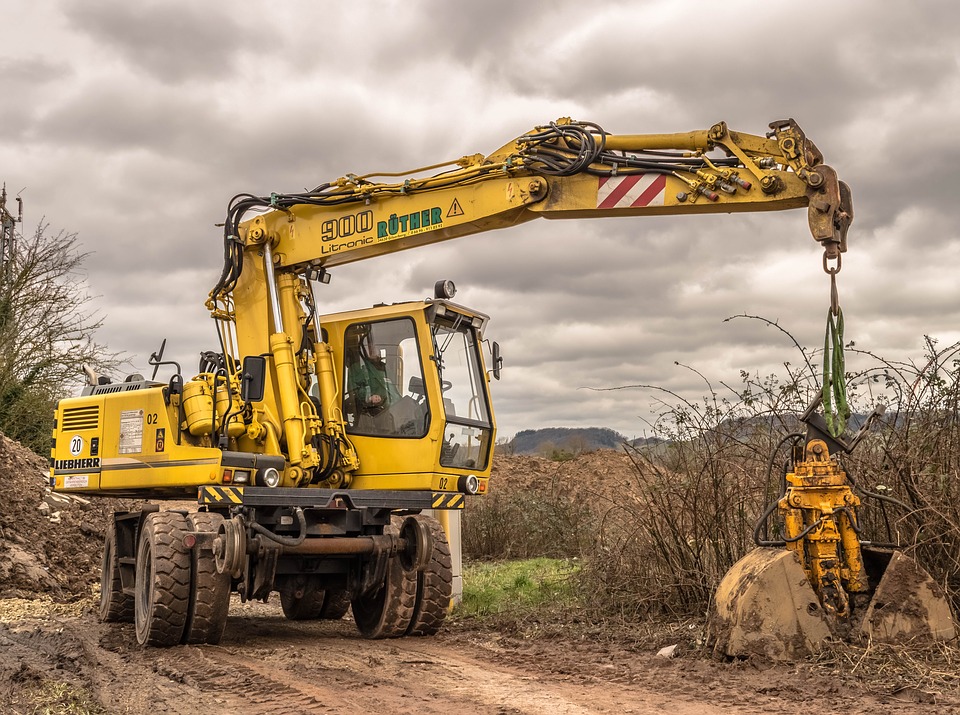
excavators construction machine - 4 Benefits of Drilling Wells in Different Angles

Vertical drilling can be difficult when it comes to installing electric or gas lines. This is because of the obstacles that you need to cross.

These include rivers, undergrounds, or roads. However, with horizontal drilling, crossing these places can be a piece of cake.

Accurate Targeting

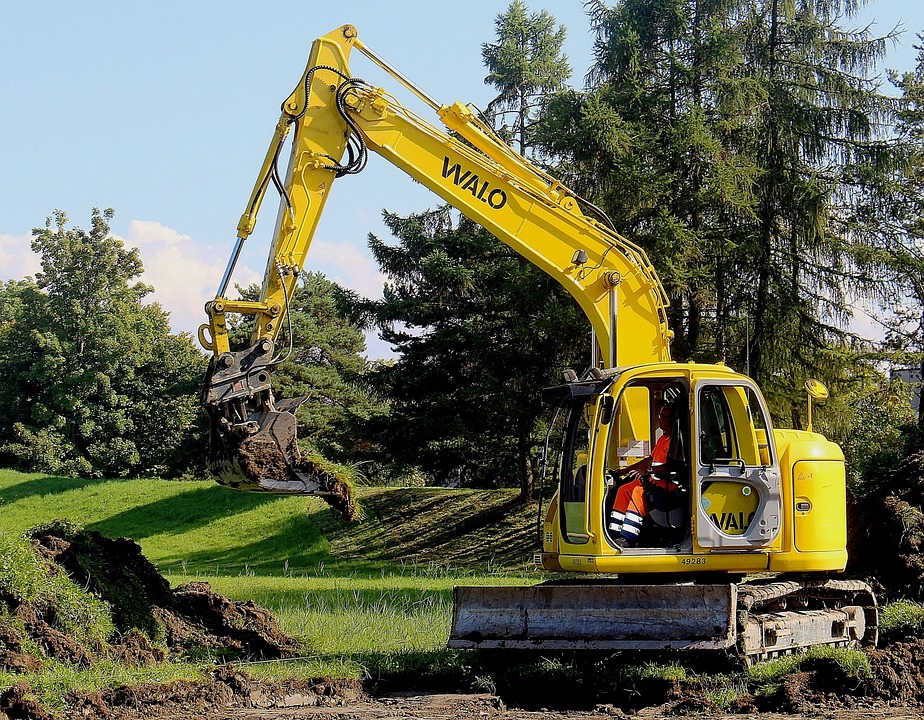
construction machine excavators - 4 Benefits of Drilling Wells in Different Angles

Sometimes, reservoirs can be located in places that are impossible to hit. However, that’s only if vertical drilling is used.

That’s why directional drilling was used and fortunately, it can tap these reservoirs. This is one of the reasons why directional drilling is used in the oil and gas industry.

Widen the “Pay Zone”

With a stone unit a hundred feet thick, a vertical well will also need to have the same thickness. However, if it’s not a vertical well, and it is drilled horizontally, then the pay zone will also have the same length.

This results to increased productivity for that certain well. If this process is aided with hydraulic fracturing, the productivity can further increase.

Drilling Pad

way building excavator the viaduct - 4 Benefits of Drilling Wells in Different Angles

The method of draining a wide area from a single drilling pad is used to reduce the footprint of a drilling operation.

In fact, there are many featured news that says drilling from a single drilling significantly reduced the development of footprints of natural gas within the drilling areas.

Conclusion

The importance of directional drilling cannot be ignored. It can change the drilling process to a whole new level.

What do you think about directional drilling? Feel free to level them in the comment section below.